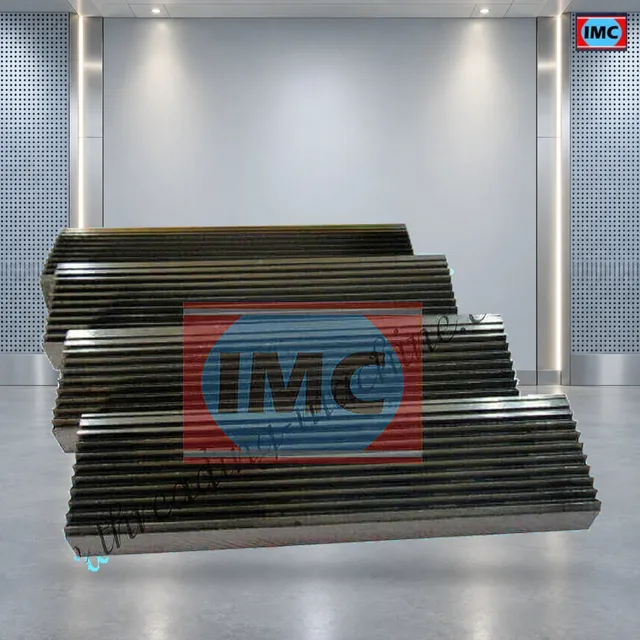
Pipe and Bolt Threading Chaser
Review Lanco Type Die-Head Chasers for your component and the required production operation. Start with the tooling interfaceTo cut external threads when a matched tangential chaser set is fitted to a ...
VIEW MORE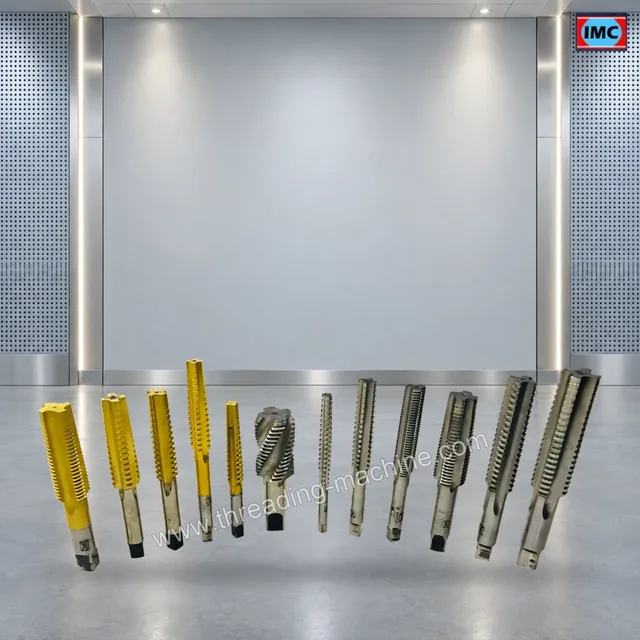
 Internal Threading Machine, Tapping Threading Machine
 Internal threading machine Manufacture | Threading Taps
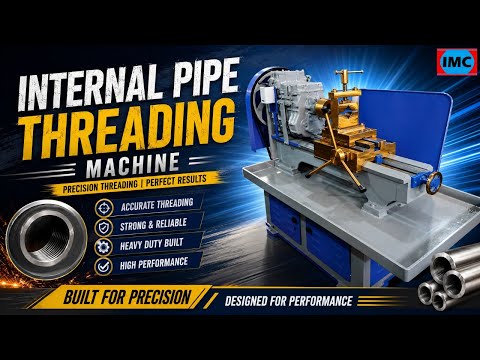 Internal Threading Machine Manufacturer | Heavy Duty Thread Cutting
 Internal Prop Cup Nut Tapping Threading Machine for Scaffolding
 Scaffolding Cup Nut Tapping Threading Machine
 Scaffolding Tapping Threading Machine For Cup Nut With Handle
 Internal Threading Machine | Internal Pipe Thread Cutting Machine by IMC
 IMC Scaffolding Prop Cup Threading Machine With Handle Manufacturing Best Quality Machinery
 Enhancing Scaffold Construction: Introducing the Internal Prop Cup Nut Tapping Threading Machine
 Internal Threading Machine, Tapping Threading Machine
 Internal Threading Machine | Internal Pipe Thread Cutting Machine by IMC
 Internal Threading Machine Manufacturer #industrialmachine #machine #internalthreadingmachine
 Seamless Precision: Your Trusted Internal Threading Machine Manufacturer
 Scaffolding Cup Nut Tapping Threading Machine | Precision & Efficiency
 Scaffolding Tapping and Threading Machine for Cup Nut with Handle | Precision Engineering by IMC
 Taper Pipe Threading Machine | Pipe Threader Manufacturer in India
 SS Steel Threading Machine | Precision Threading Solutions by IMC
Loading playlist videos...
Model data and technical details supplied for this product. Final configuration can be confirmed against your application.
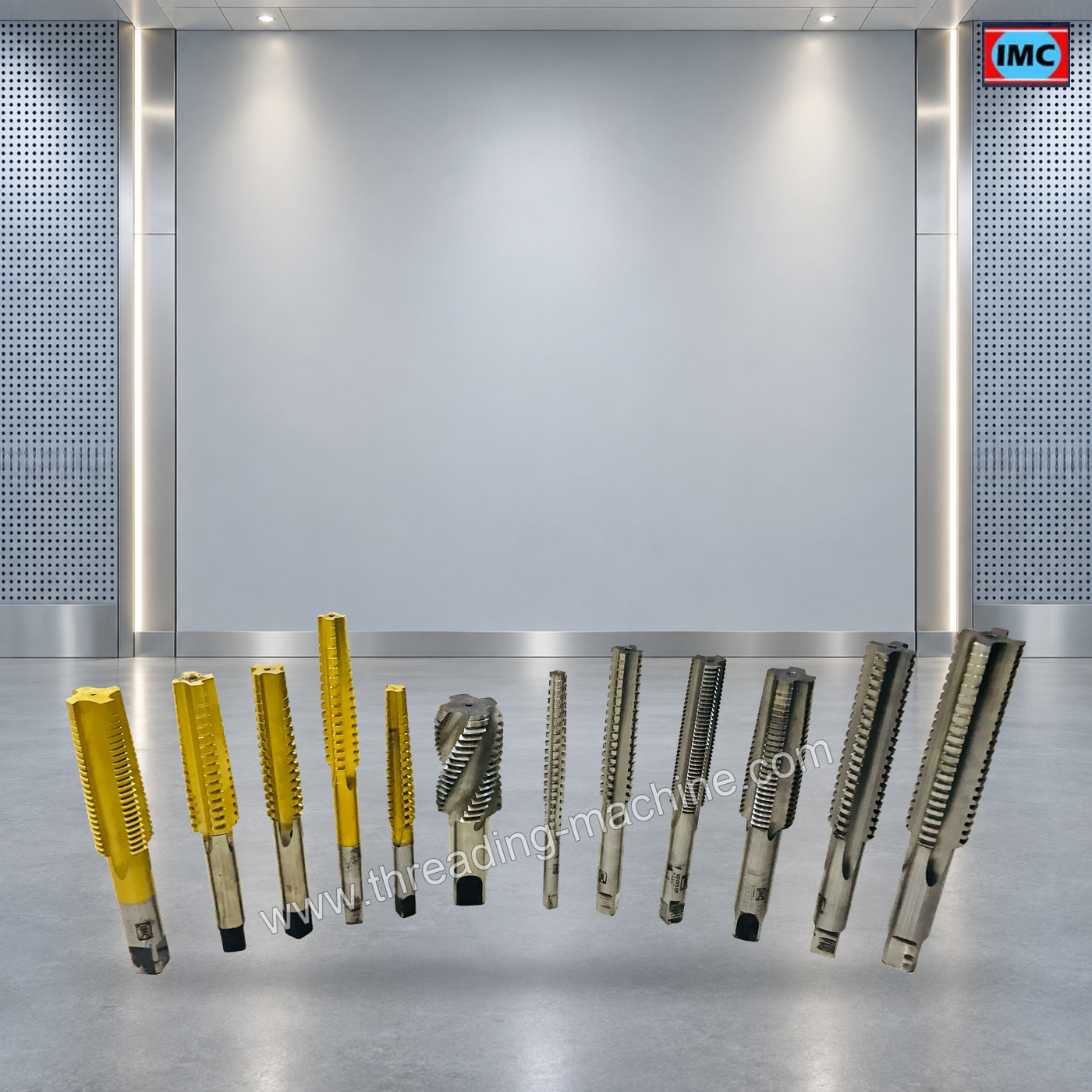
IMC Threading taps are specially designed tools used to cut the female portion of a mating pair of metal fasteners. A Threading Tap removes material from a pre-drilled or punched hole. The result produces threads within the drilled hole. The cutting edges at the front of a tap remove material from the workpiece. The chips are stored in the flutes, or pushed forward in front of the tap, or drawn up along the flutes, removing the chips and cutting fluids from the hole.
A chamfer is a tapered portion at the front end of the tap. Both the chamfered portion and the first full thread beyond the chamfer produce the finished thread of the part. Industrial Machinery Corporation manufactured Threading Taps as per industry standards and stands high on parameters of quality and durability.
Threading is divided into two types, internal and external.
Internal threading is done by using a tool called a TAP in a hole drilled to a specific diameter for the thread size and pitch you want to cut. External threads, such as bolts and studs, are made by using a tool called a DIE, which is applied to a specific diameter of the rod for the size and pitch of the threads you want to cut.
Taps and dies are tools used to create screw threads, which is called threading. Many are cutting tools; others are forming tools. A Threading Tap is used to cut or form the female portion of the mating pair (e.g., a nut). A die is used to cut or form the male portion of the mating pair (e.g., a bolt). The process of cutting or forming threads using a tap is called tapping, whereas the process using a die is called threading. Both tools can be used to clean up a thread, which is called chasing.
A Threading Tap cuts a thread on the inside surface of a hole, creating a female surface that functions like a nut.
Machine Tapping
The internal Threading Machine is used a tool tap for internal threading. Machine tapping is faster, and generally more accurate because human error is eliminated.
Although in general machine tapping is more accurate, tapping operations have traditionally been very tricky to execute due to frequent tap breakage and inconsistent quality of tapping.
The Threading Taps are offered by Industrial Machinery Corporation. Different types of Threading Taps can be used for internal threads such as BSW, NPT, UNF, METRIC, UNC, ACME, BSF Threads, etc. Industrial Machinery Corporation will also offer the benefit of customization.
Please identify hole size, material and thread designation. Add the finished drawing, expected batch size and available electrical supply. IMC can then discuss the model and the supporting equipment for that particular job.
Agree the configuration against hole size, material and thread designation, then confirm the tooling, workholding and accessories included. Any support, installation or spare-tool needs should be listed with the enquiry so the scope is clear.
Use the specifications and demonstration videos alongside your current component drawing. Record hole size, material and thread designation, the stages before and after this operation, and your desired output; that comparison gives IMC a useful basis for reviewing the change.
Review Lanco Type Die-Head Chasers for your component and the required production operation. Start with the tooling interfaceTo cut external threads when a matched tangential chaser set is fitted to a ...
VIEW MORE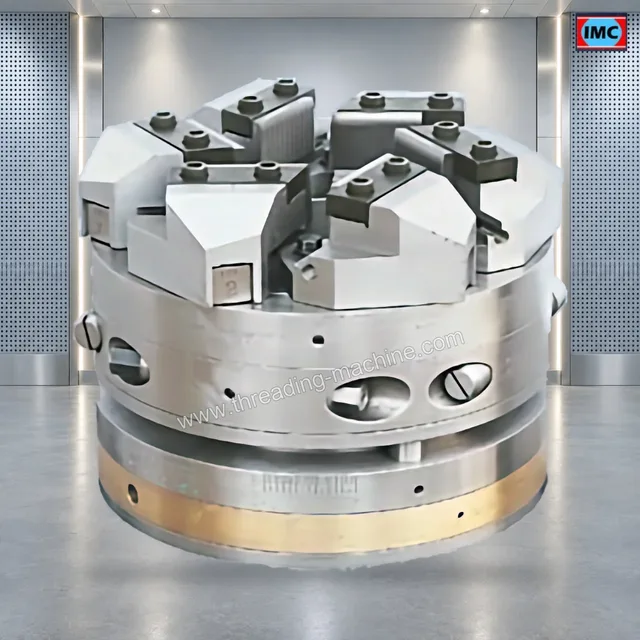
Review Lanco Threading Die Head for your component and the required production operation. Start with the tooling interfaceTo carry matched threading chasers for external thread cutting on compatible m ...
VIEW MORE